Back to Stories

The Broom
There is something about a broom that feels subtly resonant of slavery. Across time and many landscapes, it appears as a simple household tool, made by gathering grasses or shrubs and binding them into a bundle. Its purpose is work; it sweeps dust, debris, and whatever settles on the floor. Brooms stood in corners, leaned against doorways, or rested beside a hearth, always present, rarely acknowledged, and usually out of sight. In the long history of coerced domestic labor, the broom was one of the tools most often in the hands of those who were enslaved.
Across the Americas, the landscape shaped the broom. In arid regions, people relied on the tough fibers of lechuguilla or sotol since grasses were limited. In wetter lowlands and along the Caribbean coast, palm fronds, cane, and rushes were gathered and tied into sweeping bundles. Whatever the region, someone had to go out and collect the material, strip it, dry it, and bind it into a usable tool. Few of these brooms survive. They wore down quickly, and new ones were made as seasons changed and plants aged. They were everyday objects, used until they fell apart and then remade again.
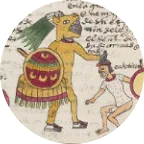
The broom’s power lies partly in its invisibility. It is a tool of maintenance rather than display. Floors swept by the enslaved, whether made of dirt, clay, tile, or wood, were noticed only when they were not clean. In missions, haciendas, and households, sweeping fell to those whose labor stayed out of view, yet it was their work that kept daily life moving. The Codex Mendoza depicts young girls learning to sweep as part of their training, a reminder that sweeping was a routine practice long before European arrival. In Spanish the tool was called escoba, in Portuguese vassoura, and in Nahuatl the verb tlachpāhua referred to the act of sweeping or cleansing
The broom was used not only to clean the rooms and corridors of those who were enslaved, but also the households they were required to maintain. At the same time, people who lived under systems of bondage cared for their own quarters. These spaces were often small and tightly controlled, yet keeping them clean offered a measure of order in a world shaped by upheaval. Sweeping could mark a threshold, calm a room, or bring a sense of grounding where autonomy was scarce. Joseph Rael of Picuris Pueblo remembered his grandmother using a hand-brush made from a sacred plant. He wrote that “these brushes were holy because the herb the straw was taken from was sacred.” For her, sweeping was work, but it was also a kind of prayer.
When Aby Warburg visited Acoma Pueblo in 1896, he noticed a broom hanging on a wall and called it “the symbol of intruding American culture.” To him it marked the arrival of a new order pressing against older ways of life. It is hard to know exactly what he saw in that broom, whether its form or its material signaled something he understood as American. What stands out now is how familiar the object was and still is. Nearly every household, in every generation, has kept a broom close at hand. Its universality can hide its history. For many people across the Americas, including those who lived under forced labor, the broom was part of daily work, a tool that shaped the spaces they cared for and that carried the weight of both necessity and subjugation.
Citations
- Codex Mendoza, fol. 60r. Bodleian Libraries, University of Oxford.
- Warburg, Aby. Gesammelte Schriften, Vol. I. (Leipzig, 1932).
- Rael, Joseph. Being and Vibration: Entering the New World (Santa Fe: Bear & Co., 1993).