Records in Context
Context is not supplementary to our work. It is an essential element of the work.
At Native Bound Unbound, we deliberately avoid presenting isolated clippings or extracted entries. Instead, we prioritize the full page and, whenever possible, the full document. Reading records in their original context allows viewers to see how references to Indigenous captivity and enslavement appeared alongside other notices, rituals, and transactions of everyday life. Context restores scale, meaning, and credibility.
This approach is especially important for newspapers. Runaway notices and advertisements involving Indigenous people are often embedded within dense columns of unrelated material. By presenting the entire page, we preserve critical information such as the name of the periodical, publication date, layout, and surrounding content. In some cases, identifying details appear only on an adjacent page. For this reason, we include both pages, highlighting the relevant passage while maintaining the integrity of the whole.
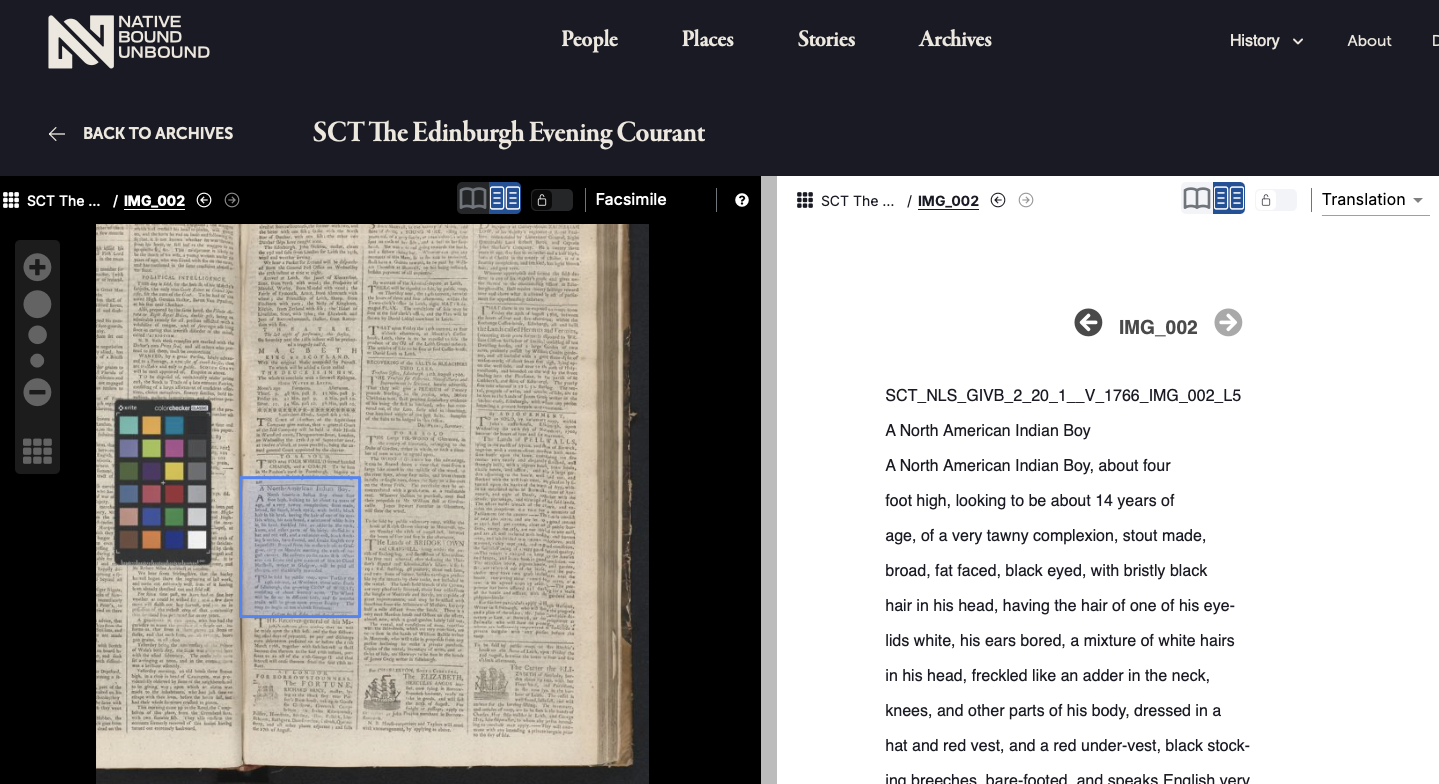
The same principle guides our treatment of sacramental records. Baptismal, marriage, and burial entries are never separated from the manuscript pages on which they appear. Users encounter the full image, with the specific entry highlighted, alongside a transcription and translation. This allows readers to see how individual lives were recorded in relation to others and how clerical practices shaped what was preserved.
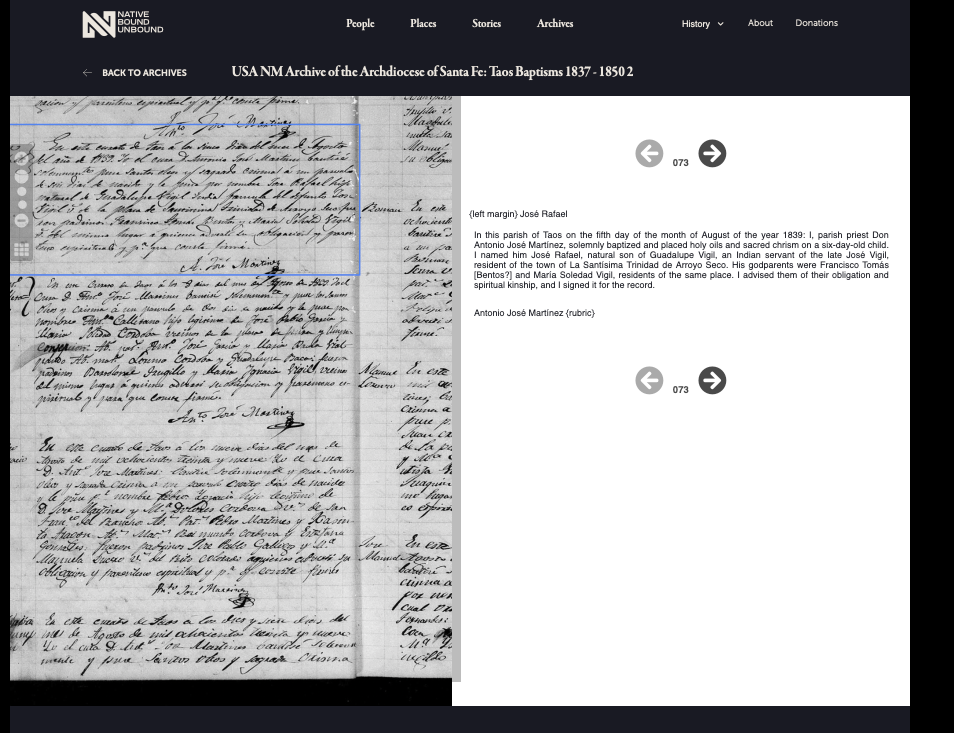
This method is consistent across the site. Whether working with newspapers, legal documents, or parish registers, we preserve the integrity of the record while guiding readers to specific evidence. In doing so, we balance accessibility with accountability, ensuring that interpretation remains grounded in the material realities of the archive.